

People often ask me what the most important rule in branding is. They expect me to say consistency. It’s probably the most repeated word in our industry, and for good reason. Consistency builds recognition, trust and familiarity. But I always tell the team that consistency is only valuable until it starts getting in the way of communication.
One of the ideas I keep coming back to is that every brand lives somewhere on a spectrum between consistency and flexibility. Push too far toward flexibility, and the brand begins to lose itself. Every campaign looks unrelated, every designer interprets the identity differently, and eventually the audience stops recognizing the brand. Push too far toward consistency, however, and you create a different problem. Everything starts looking the same. The brand becomes predictable, repetitive and, ironically, less interesting. Instead of becoming stronger, it becomes difficult to work with because every new application feels constrained by yesterday’s decisions.
I always tell the team that our job isn’t to create rules. Our job is to create a system that knows when to follow them and when to bend them. That’s a very different way of thinking about branding. We’re not designing a logo or a color palette in isolation. We’re designing something that has to live across hundreds, sometimes thousands, of touchpoints over many years.
The mistake many people make is assuming the answer is always somewhere in the middle. It isn’t. A bank, for example, probably needs to lean much more toward consistency because trust comes from familiarity. A restaurant, a fashion brand or a media company usually needs much more flexibility because they’re constantly creating new content and new experiences. Neither approach is right or wrong. The right balance depends entirely on what the brand needs to become.
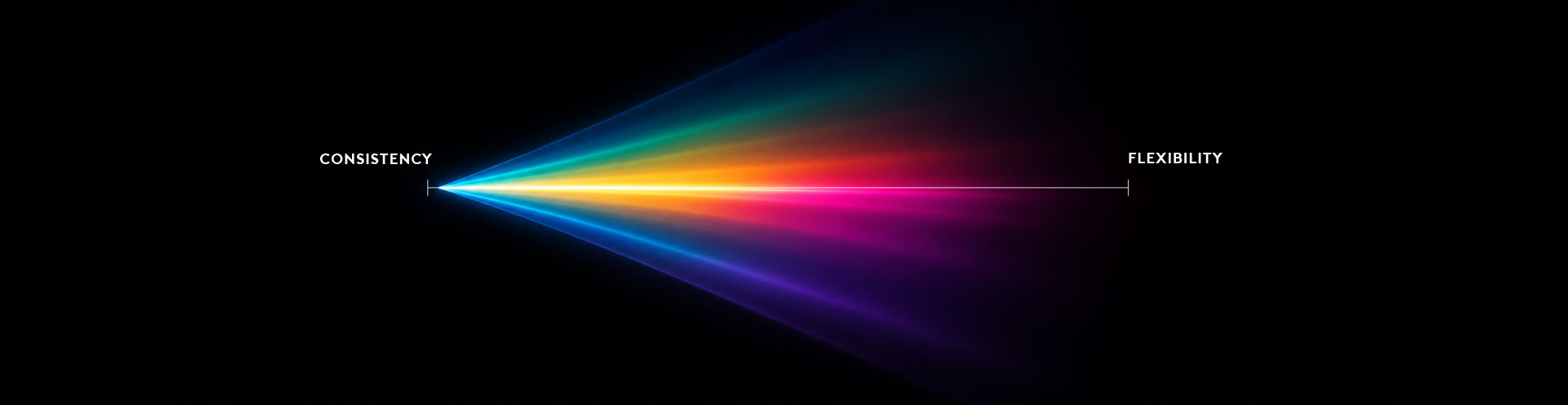
After more than twenty years in branding, I’ve become less interested in asking whether an identity is consistent and more interested in asking whether it’s adaptable. The strongest brands I’ve worked on are the ones that can evolve without losing themselves. They don’t look identical every time, but they always feel unmistakably like the same brand.
That balance isn’t something you’ll find in a book or on a checklist. It comes from experience. The more brands you build, the more you develop an instinct for where each one belongs on that spectrum. Some need more structure. Others need more freedom to evolve. Knowing the difference is where strategy begins.
To me, that’s what great branding has always been about not choosing between consistency and flexibility, but knowing exactly how much of each a brand deserves.